


On behalf of Bakker Sliedrecht, EMHA redesigned and built the drive system and machine frame for a screw pump station in the Alblasserwaard. Through a combination of engineering, analysis and implementation, the installation has been optimised for efficient operation and low vibration levels. The result is a future-proof and reliable drainage solution.
Situation
The existing screw pump drive has been converted from a stepped-speed electric drive to a fully frequency-controlled drive system. This modernisation resulted in more efficient drainage, but at the same time placed new demands on the dynamic behaviour of the installation.
The existing structure, in combination with specific rotational speeds, proved to be susceptible to increased vibration levels. The client’s objective was to ensure the performance of the new drive system, to control vibrations systematically and to increase the reliability and service life of the installation.
Solution
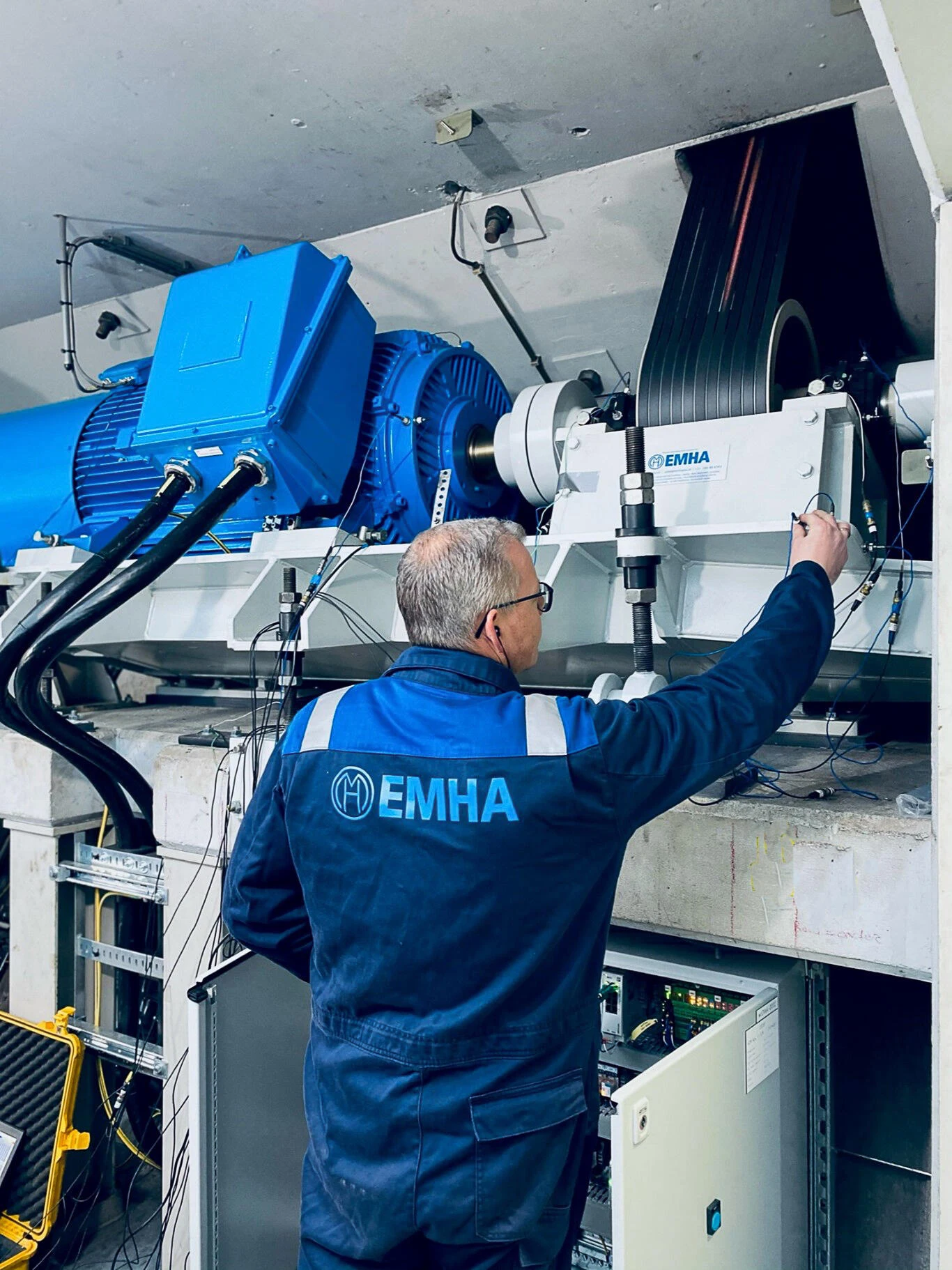
EMHA took a holistic approach to the project, from analysis to implementation. Initially, a comprehensive vibration study was carried out, using an Operational Deflection Shape (ODS) analysis to provide insight into the dynamic behaviour of the machine frame. This enabled critical areas and areas for improvement to be accurately identified.
Based on these insights, the engineering department designed a new machine frame, combined with modified bearing housings to improve stiffness and dynamic properties. Using FEM software (Ansys and Femap), stiffness, natural frequencies and stress distributions were analysed in advance, ensuring the design was optimally tailored to the new drive configuration.
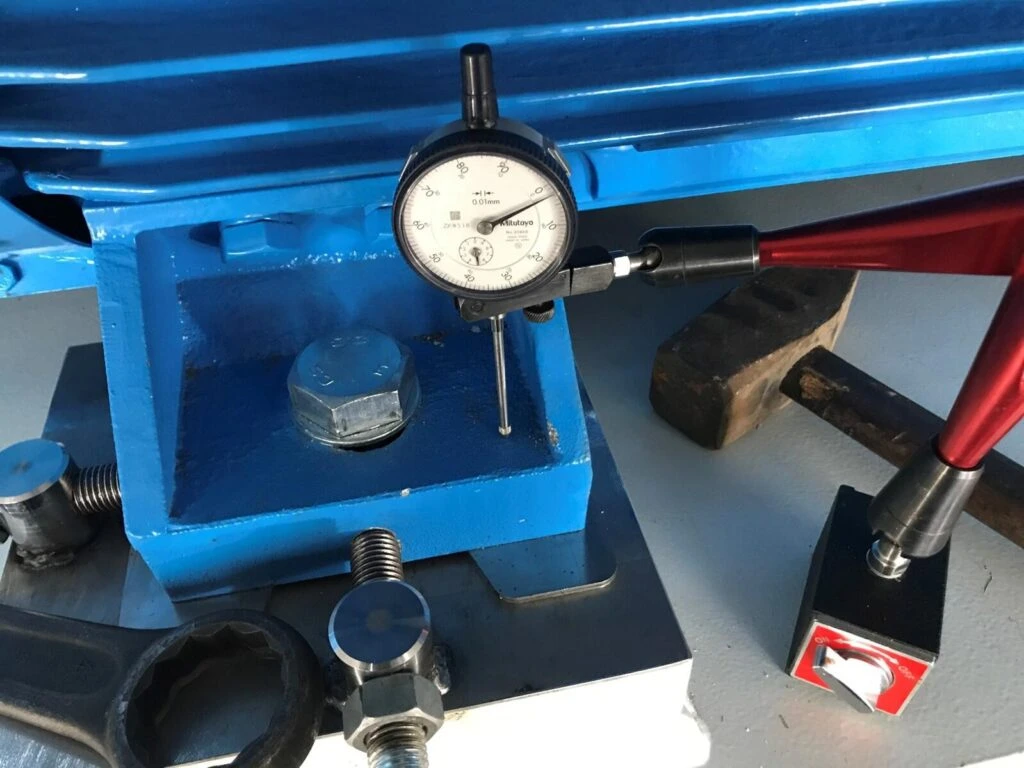
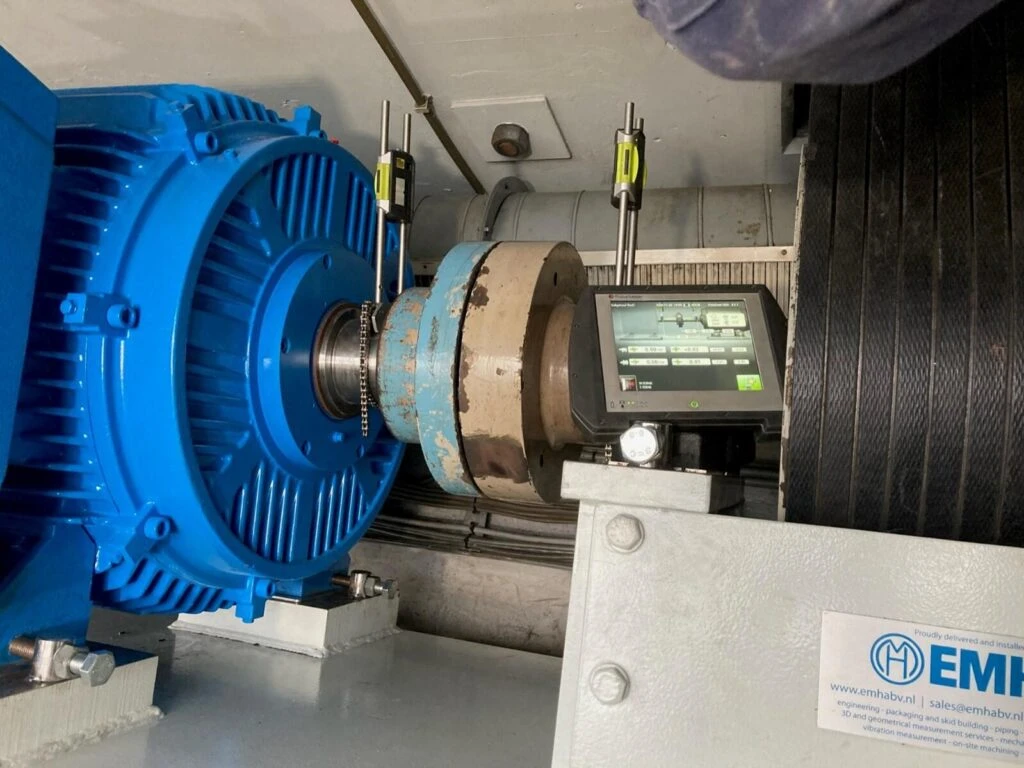
The new structure was then fabricated in EMHA’s workshop, machined to eliminate stress and finished with a durable C4I coating system. Subsequently, the EMHA service team assembled, anchored and precisely aligned the installation on site, including pulley and shaft alignment of the entire drive train.
Result
Following handover, the installation was thoroughly tested, with vibration levels measured across the entire speed range. These were found to remain well within the standard, with values of around 1.5 mm/s, whereas 4.5 mm/s is permissible under the applicable ISO standard.
This not only meets the technical requirements but also represents a clear improvement on the original situation.
The client now has a more efficient and better-controlled drive system, combined with a stable and durable machine frame. This results in greater operational reliability, reduced maintenance requirements and an extended service life for the installation.
The project demonstrates EMHA’s strength as an all-round partner that seamlessly combines analysis, engineering and implementation into a single integrated solution.