


01. Preparation
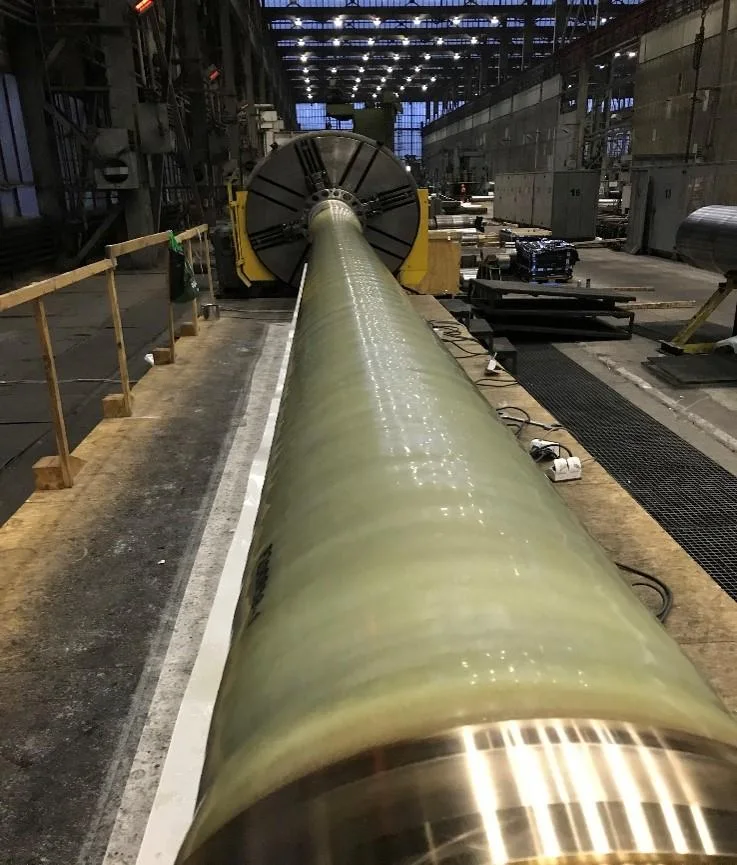
The shaft is mounted in a lathe within our controlled, air-conditioned engineering workshop, ensuring precise application of the coating.


Propeller shafts operating in marine environments are continuously exposed to seawater and other demanding conditions. Without adequate protection, corrosion can affect the shaft’s surface, leading to material loss, increased maintenance requirements and potential damage.
Corrosion can gradually cause material loss and create pitting on the shaft surface. Over time, this can affect the integrity of the shaft and increase the need for maintenance or repair.
For critical components such as propeller shafts, preventing corrosion from the outset is an important part of maintaining reliability and protecting the investment.
How does EMHA protect propeller shafts?
The shaft is mounted in a lathe within our controlled, air-conditioned engineering workshop, ensuring precise application of the coating.

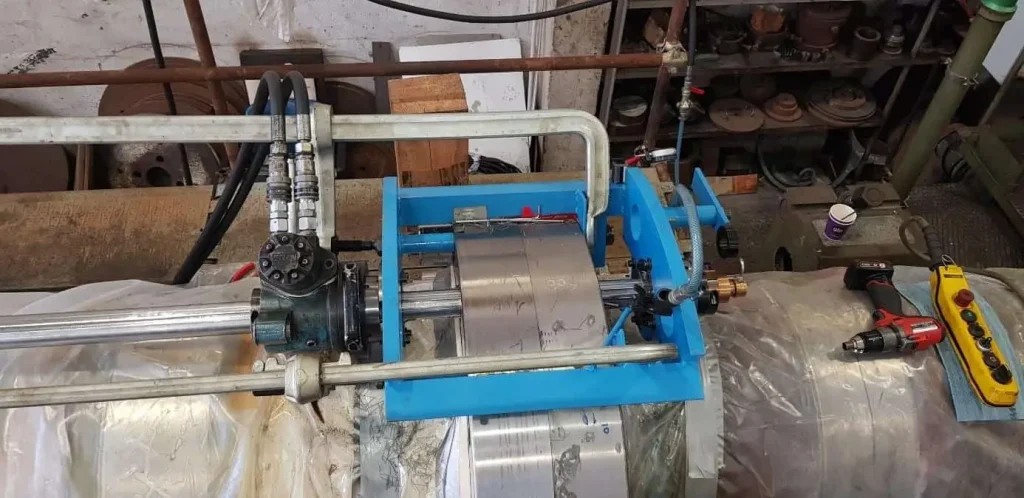
An initial layer of epoxy is applied to the shaft to prepare the surface for the protective coating system.

Fibreglass tape and epoxy are carefully applied in multiple layers, building up a durable protective coating with optimal adhesion.

A final layer of epoxy creates a smooth, homogeneous protective surface that helps prevent seawater from reaching the shaft material.
Shaft coating is a protective treatment applied to a shaft to help protect its surface against corrosion, wear and environmental influences. For marine applications, it helps protect propeller shafts against corrosion caused by seawater.
Propeller shafts are exposed to seawater, which can cause corrosion and material loss over time. A protective coating helps prevent seawater from reaching the shaft material, supporting its service life and reliability.
At EMHA, we apply Phillyclad® 1775/620TS, a proven shaft coating solution from ITW Performance Polymers, in accordance with the manufacturer’s specifications. Combined with fibreglass tape, this epoxy-based system forms a durable protective layer designed to protect propeller shafts against corrosion in demanding marine environments.
Phillyclad® 1775/620TS is a two-component, corrosion-resistant epoxy coating designed to provide long-term protection for water-lubricated shafts. It is applied in combination with fibreglass tape to create a durable, fibre-reinforced protective coating.
The epoxy and fibreglass coating forms a protective barrier that helps prevent seawater from reaching the shaft surface, reducing the risk of corrosion. Its adhesion and resistance to seawater exposure and mechanical wear help protect the shaft in demanding marine environments.
EMHA applies shaft coatings in its controlled, air-conditioned engineering workshop. On-site application is also possible for specific projects and applications.
Yes. EMHA can apply shaft coatings on-site, for example after precision machining of shaft connections on naval vessels.
The service life of a coating depends on the application, operating conditions and whether the coating remains undamaged. A properly applied coating can provide long-term corrosion protection. Regular inspection and consideration of external damage remain important.
Protect your propeller shaft with EMHA! Looking for a reliable solution to protect your propeller shaft against corrosion? Our specialists are happy to discuss your requirements and advise on a shaft coating solution tailored to your application.
Together we provide clarity, priority and a clear plan of actio