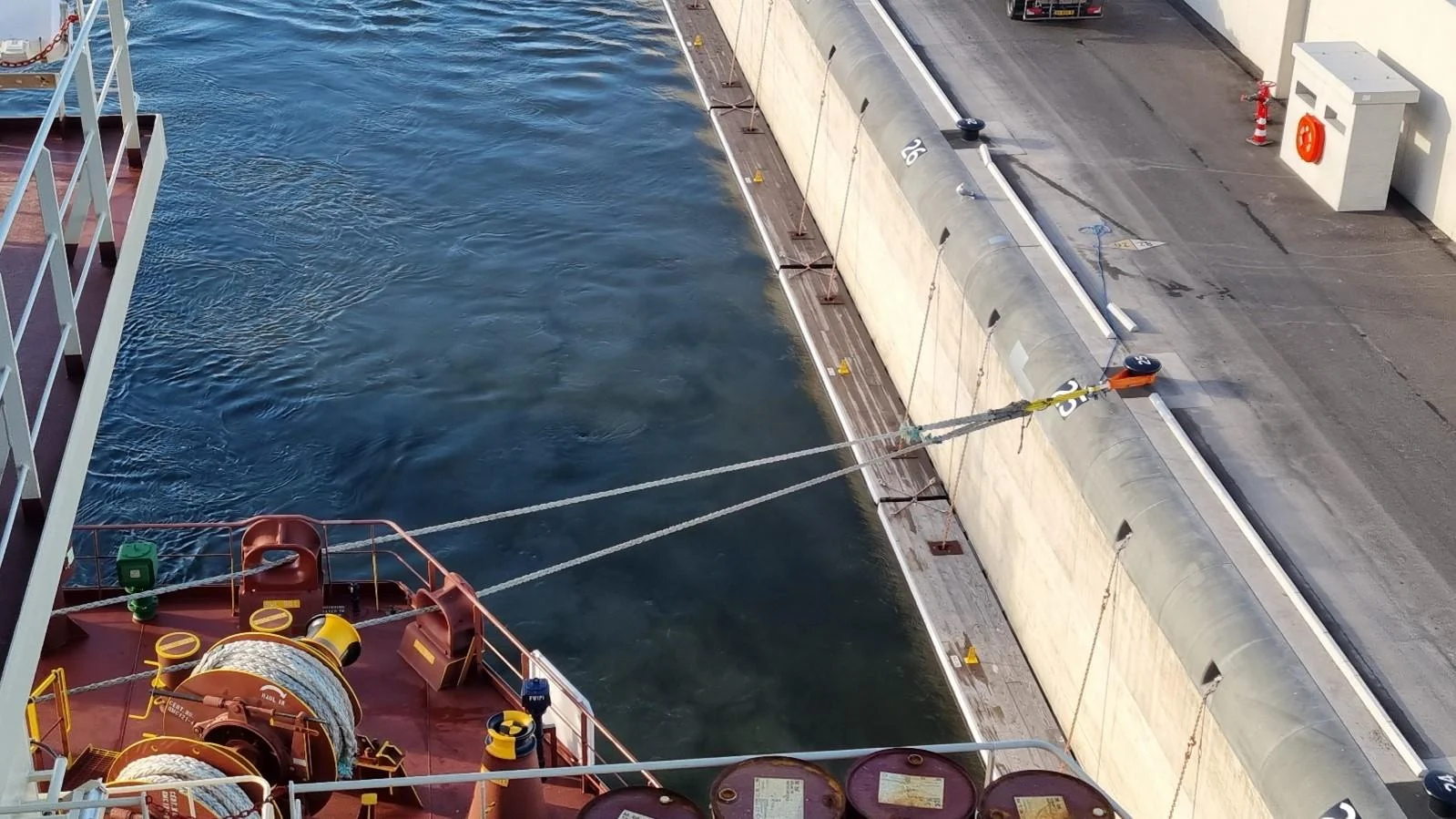


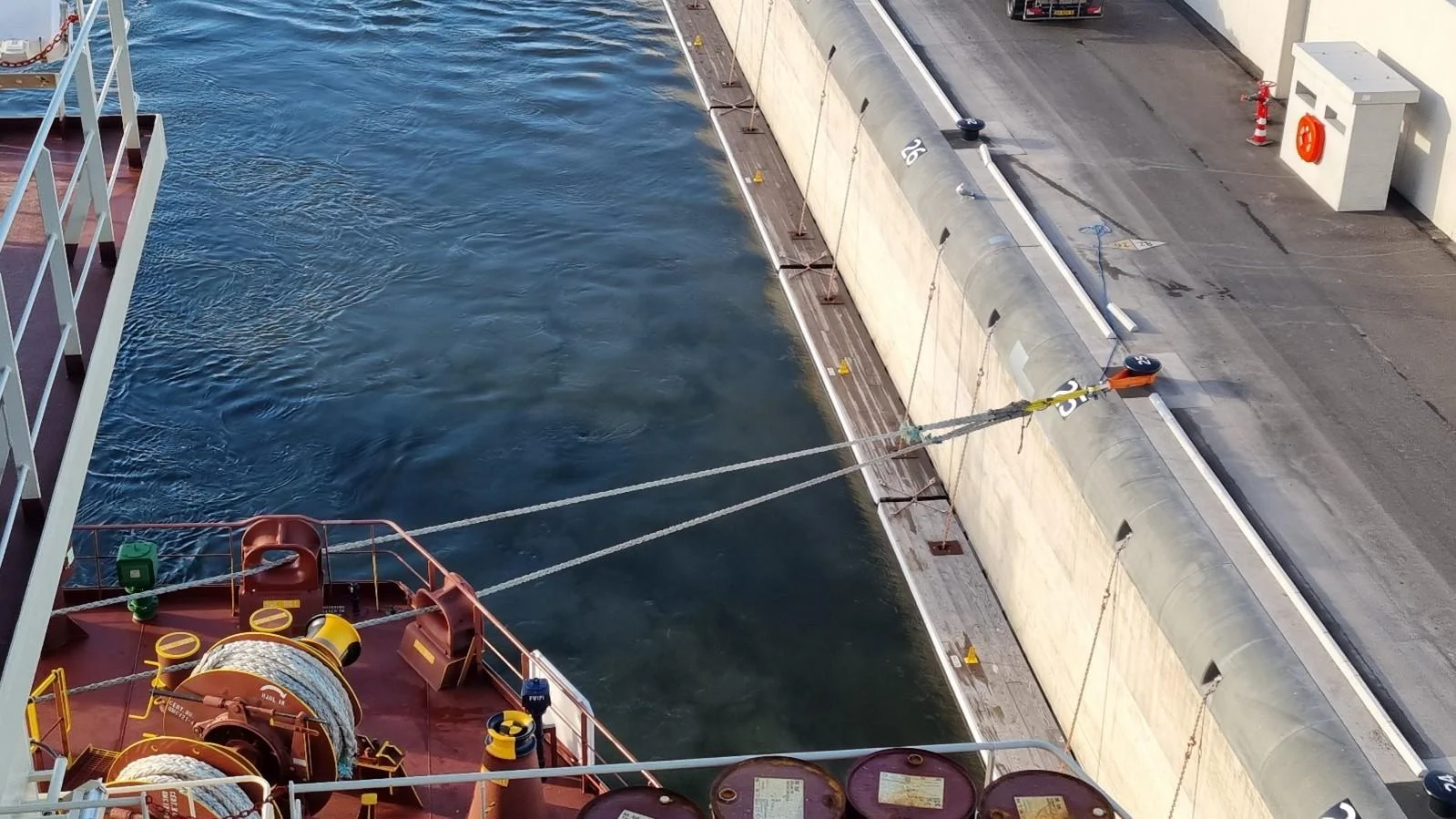
In collaboration with the Pilotage Service, EMHA has developed a measurement system for Rijkswaterstaat to provide insight into the forces acting on mooring lines in the IJmuiden Sea Lock. These measurements are used to assess the effect of fresh- and salt-water currents on vessels in the lock. The result is real-time insight into these forces and better preparation for safe manoeuvres.
Situation
Due to the great depth of the new IJmuiden Sea Lock, considerable forces are exerted on ships as a result of the mixing of fresh and salt water in the lock chamber. These currents place a strain on the mooring lines, which has a direct impact on the safe mooring and manoeuvring of ships. For Rijkswaterstaat and the Pilotage Service, it was essential to gain a clear understanding of these forces for different types of vessels and situations. The aim was to determine the maximum forces that occur and to gain insight into the differences between incoming and outgoing vessels.
Approach
EMHA has put together a complete measurement system based on TechnoFysica® load cells, which accurately recorded the forces in the mooring lines. Four force sensors with capacities of 55 and 85 tonnes were used for this, combined with suitable mounting fixtures. The measurements were displayed in real time and logged via dedicated software on a laptop, enabling both immediate analysis and long-term monitoring.
The measurements were carried out on vessels of various sizes and under different conditions, including the difference between vessels entering the lock and those leaving it. This has provided a representative and comprehensive picture of the forces at play within the lock.
Result
The measurements carried out provide a clear and well-founded insight into the forces acting on mooring lines as a result of fresh and salt water currents. This enables the Pilotage Service to operate in a better-prepared manner and to gain experience of how vessels behave during lock passages.
In addition, Rijkswaterstaat now has valuable data that can be used to further optimise procedures and safety within the lock. With this solution, EMHA is contributing to safer and more predictable use of one of the Netherlands’ most important pieces of maritime infrastructure.